Creative Strategy Presentation
Please review on desktop.
Contents
Alignment
Where We Are Now
Project Mission
Mood Boards
Direction One
Direction Two
Iconography & Illustration
Design Principles
Best Practices
Promotional Features
What Success Looks Like
Required Materials
What Success Looks Like
Next Steps
Alignment
Where
we are Now
The current website works for existing customers but leaves real potential on the table. The gaps are clear: weak organization, missed promotional opportunities, limited social proof, and no cohesive design vision. Product pages compound this by front-loading too much information, which pushes undecided buyers away right when they're closest to converting.
Project
Mission
This project exists to close the gap between Noah's creator identity and the premium product it should be selling. That means building a purchase flow that earns trust quickly, reduces decision paralysis, and surfaces the right promotional opportunities without feeling pushy. Visually, we're aiming to expand the brand recognition through effective use of new and pre-existing assets e.g. photography, icons, illustration, as necessary, to create a buying experience that feels considered.
Mood boards
A mood board is a strategic visual reference that helps us align on direction before we design anything final, not a set of sites to copy. We pulled from across industries on purpose, focusing on the feel of well-executed design rather than anything category-specific, because great visual principles translate regardless of niche.
You'll notice not every example is a perfect fit either; some are very over-designed and have tradeoffs in accessibility or speed that we wouldn't replicate. We're borrowing an idea, not a blueprint. The goal is to turn vague words like "clean" or "premium" into something we can actually point at and react to together, so your feedback here, even just "I love this but hate that," is what will steer our approach.
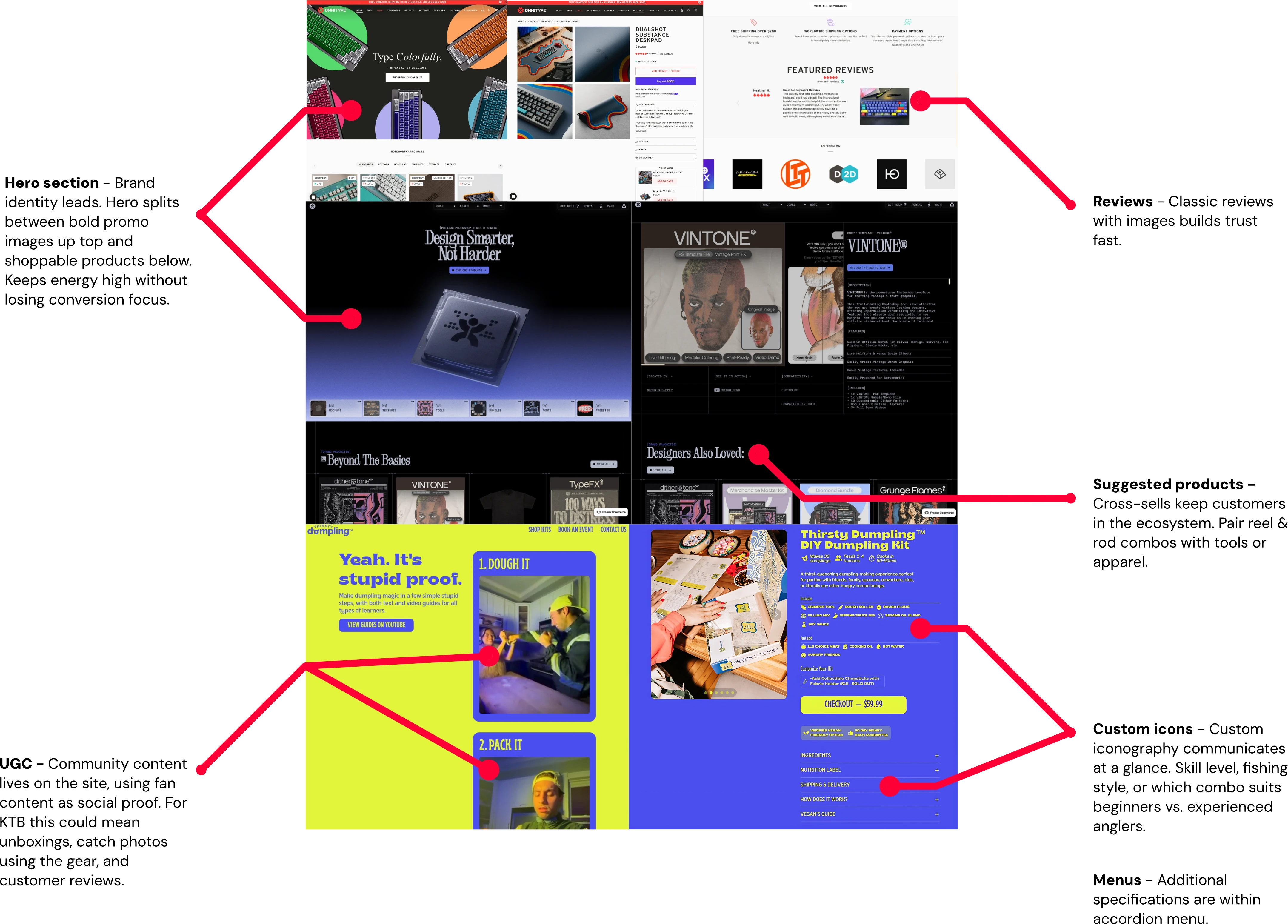
Direction One
Character Driven, Design Forward, Accessible
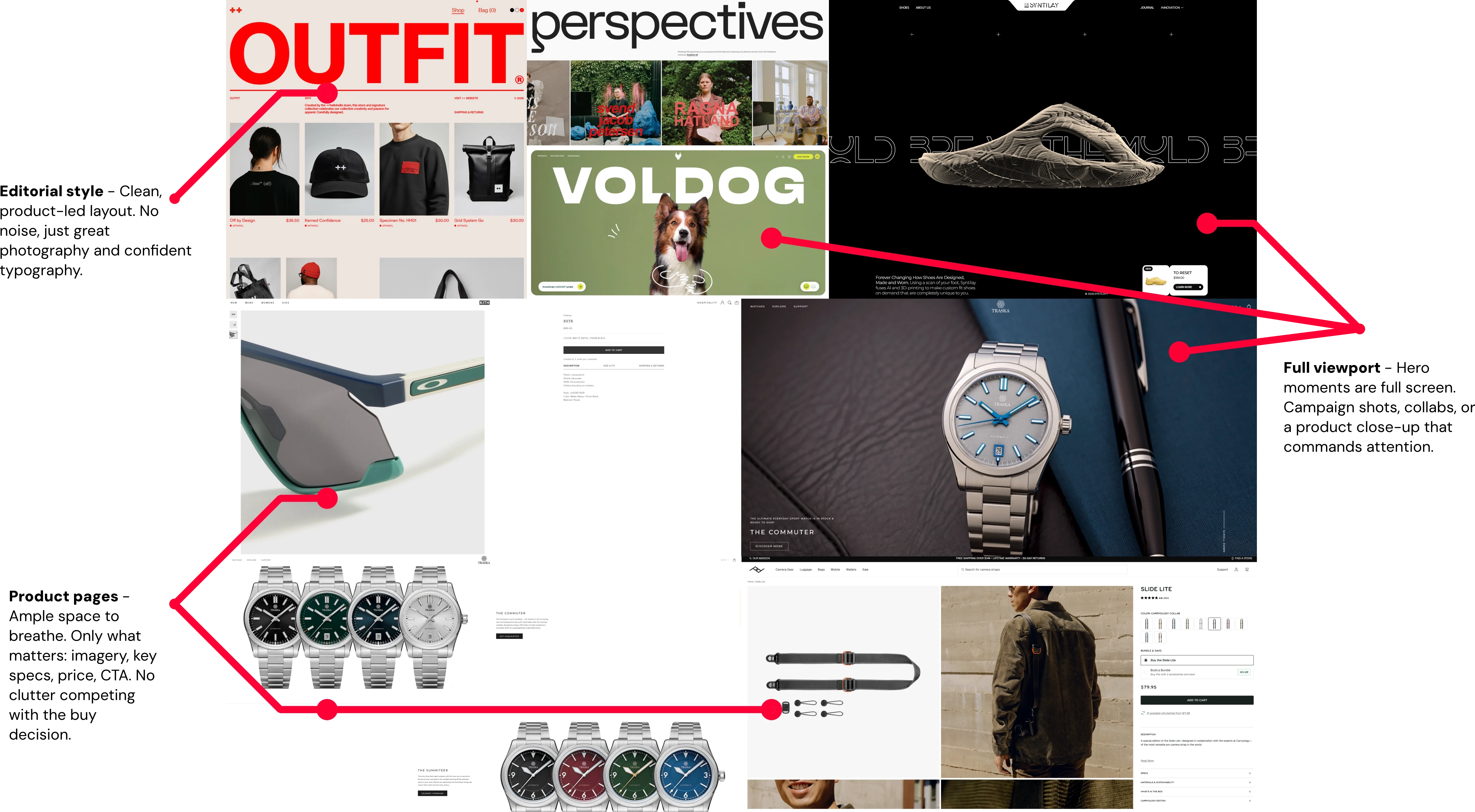
Direction Two
Editorial, Premium, Enthusiast
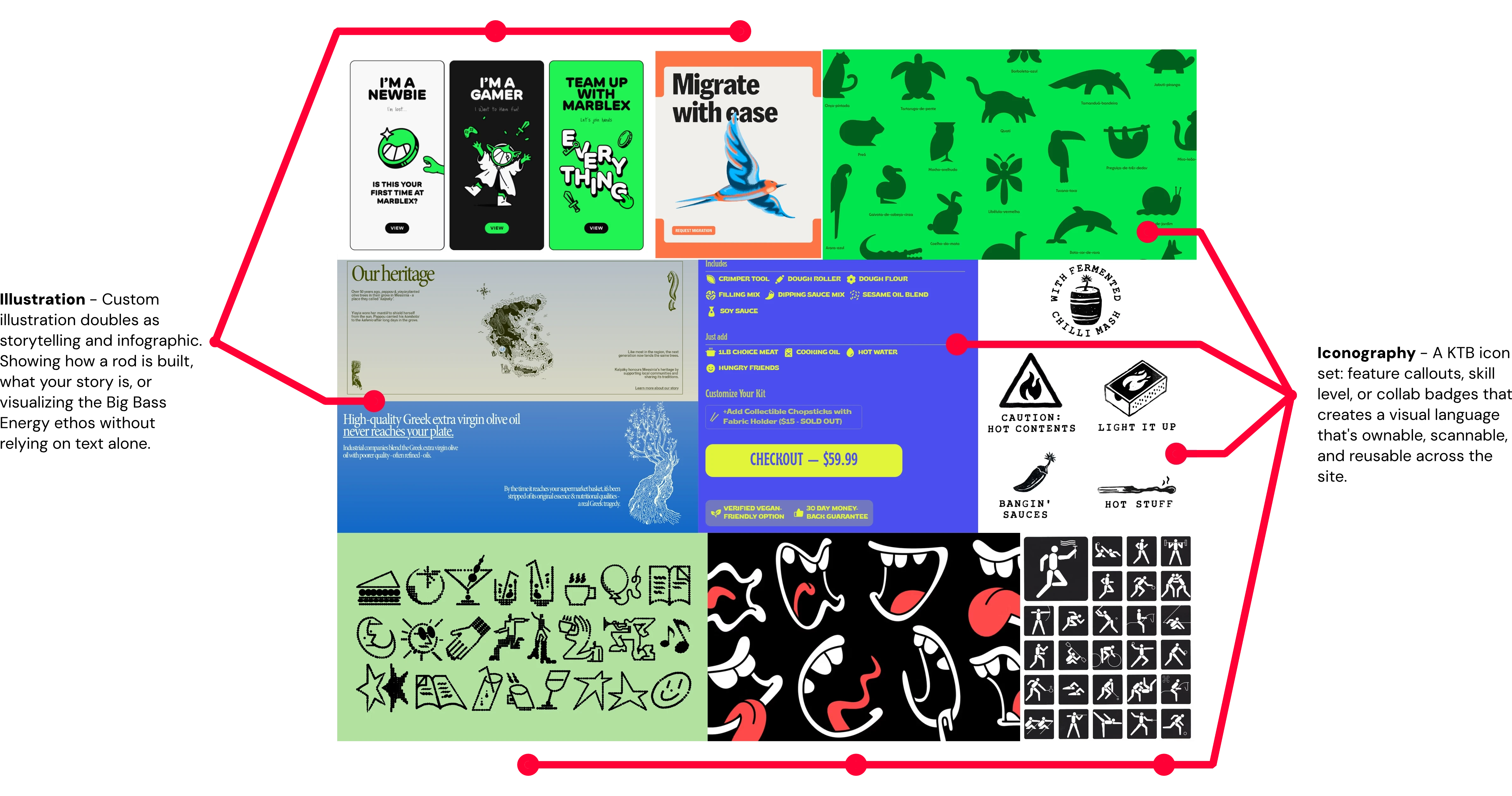
Iconography & Illustration
We can use iconography to reduce processing time for prospective buyers by designing symbols that represent, for example, what each Rod and Reel combo is good for, who it's geared towards, and its specifications at a glance.
We can use illustration to enhance the visual presence of the site and expand the visual language of your brand.
Design Principles
This section serves to give you more specific insight into our strategy for execution and give you an opportunity to offer feedback for alignment.
Best
Practices
What we should strive for:
Mobile-accessible design
Product forward layout
Noah's brand identity is core of the design
Surface only what's essential, let customers dig deeper if they want more information
Stick to familiar e-commerce formats
Use design to guide purchase decisions
Design elements should enhance the buying experience, not compete with it
What we should avoid:
Visual clutter that increases cognitive load
Excessive animations that cause the site to lag
Promotional
Features
Note: The following are strategic recommendations for features that would meaningfully improve conversion. Implementation will depend on Zach's workflow and we'll confirm feasibility before committing to any of these in the final design.
Always On:
Cart reminders
Email list sign up discount
- Always great for keeping customers on tap and alerting them of sales or new productsSocial proof via reviews, text based or UGC
- UGC builds credibility fast and keeps customers on the site instead of leaving to validate their purchaseBack-in-stock notifications
Cart upsells for products often bought together
- Suggesting frequently bought together items can increase Average Order Value
Run When You Have a Promo:
Website announcement banner for new products, sales, or collaborations
Bundle deals/combos
What
Success
Looks like
Let's make sure we're aligned on this!
Success is a site that feels like KickinTheirBass, not just a store that happens to sell KickinTheirBass products. A buyer landing on it should immediately understand who Noah is, trust the product, and find it easy to buy. We get there through low visual noise, clear product communication, and design that puts Noah's brand at the center of each design element. Not through claims, through the experience itself.
Required Materials
Shopify Headless API Token Get your API token by following the instructions [HERE]. This lets me pull your current products directly into Framer, so we won't have to re-enter each one manually during the design phase. (Note: Zach will handle his own separate integration later — this is just a temporary read-only connection for design purposes.)
High-Resolution Promotional Assets Share any marketing images or graphics you have, product photos, lifestyle shots, anything promotion-ready.
Brand Guidelines & Assets If you have any, share your logo variants, fonts, colors, and any brand style guide you follow if applicable.
Share an access link OR upload assets to the Google Drive folder below
How to Give
Feedback
Focus on the Why: Describe how a design or direction feels or why it deviates from your positioning instead of suggesting pixel changes. This allows us to find the best creative solution.
Be Specific: Our goal is a collaborative final product. If your ideal outcome lives somewhere between these concepts, perhaps combining the design philosophy of direction one with the layout style of direction two, we want to hear it. Your feedback helps us refine these elements into a singular, cohesive strategy.
Next
Steps
Submit feedback, and gather necessary assets and materials.
We'll make any changes to the approach for approval.
Once approved, Design & Development Begins